General Adaptation Syndrome
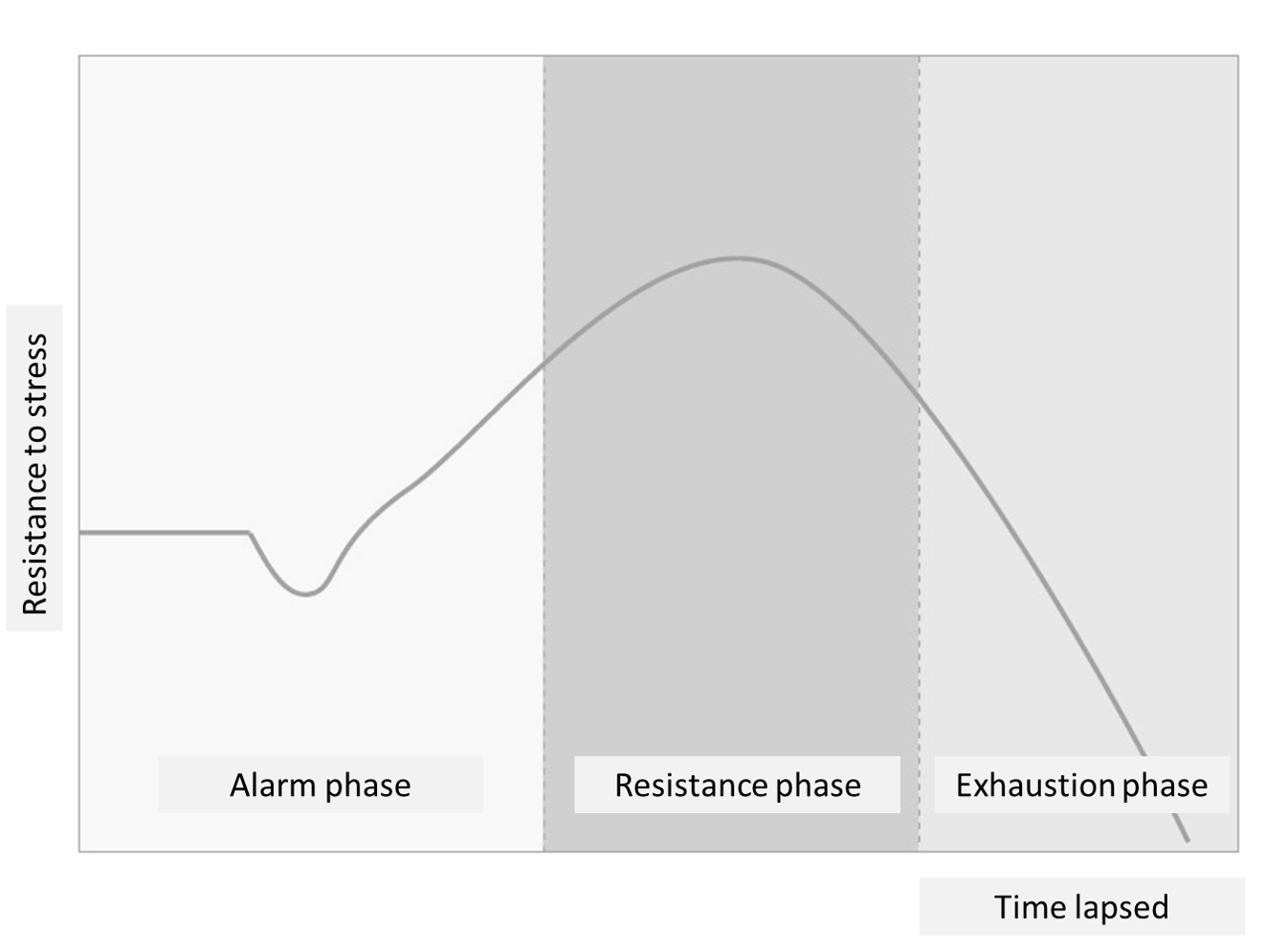
It was described by Hans Selye.
Hypothalamo-Pituitary-Adrenal (HPA) axis is known to play a role in chronic stress.
Grief
Reaction to loss of loved one or an object or anything personally valued.
Stages of Grief (described by Kubler Ross):
- Denial
- Anger
- Bargaining
- Depression
- Acceptance
Pathological Grief:
- Hypertrophic grief
- Absent grief
- Delayed grief
- Chronic grief
- Anniversary grief
Prolonged grief is a new a new diagnostic condition added into ICD 11.
Life event
Life event is any event or experience which is known to test the resources of an individual to cope with the same. A scale used to assess life and quantify life events is called Presumptive Life Events Scale, developed by Gurmeet Singh.
As per this scale, the maximum points given is for death of spouse.
4 psychiatric conditions requiring a causative event are:
- Acute stress reaction
- Acute stress disorder
- Adjustment disorder
- Post-traumatic stress disorder
Most common psychiatric illness diagnosed in cancer patients – Adjustment disorder
Most common psychiatric illness diagnosed in HIV patients - Depression
Acute stress reaction
This is a condition characterized by shock like state with significant confusion, stupor, autonomic or emotional or cognitive changes. It is known to last only briefly and the symptoms are known to reduce in the first few days.
This condition is described in ICD and not in DSM.
Acute stress disorder
It is a condition described in DSM and not in ICD.
It is characterized by 3 - 30 days of significant symptoms suggestive of stressful reaction of the body to the recent traumatic experience. The symptoms can affect ones behaviour, emotions, autonomic system and bodily functioning.
Adjustment disorder
This condition is known to have an onset within 3 months of the life event, and is characterized by symptoms of mild depression, anxiety and conduct symptoms. It is known to mostly self remit within a maximum period of 6 months after the life event.
Post traumatic stress disorder (PTSD)
It is characterized by presence of 4 important symptoms for atleast 4 weeks, after a life threatening experience.
The 4 important symptoms are:
- Hyperarousal
- Nightmares and sleep disturbance
- Flash backs
- Avoidance
Late onset PTSD is the occurrence of symptoms after 6 months of life threatening event.
Complex PTSD is a newer diagnosis included in DSM 5 and ICD 11. It is characterized by an individual with PTSD who has:
- Recurrent traumatic experience
- Significant interpersonal relationship issues
- Persistent cognitive distortions
Eye Movement Desensitization and Reprocessing (EMDR) is a technique useful as therapy for PTSD.