SECTION 01
Basic understanding
Yerkes Dodson curve:
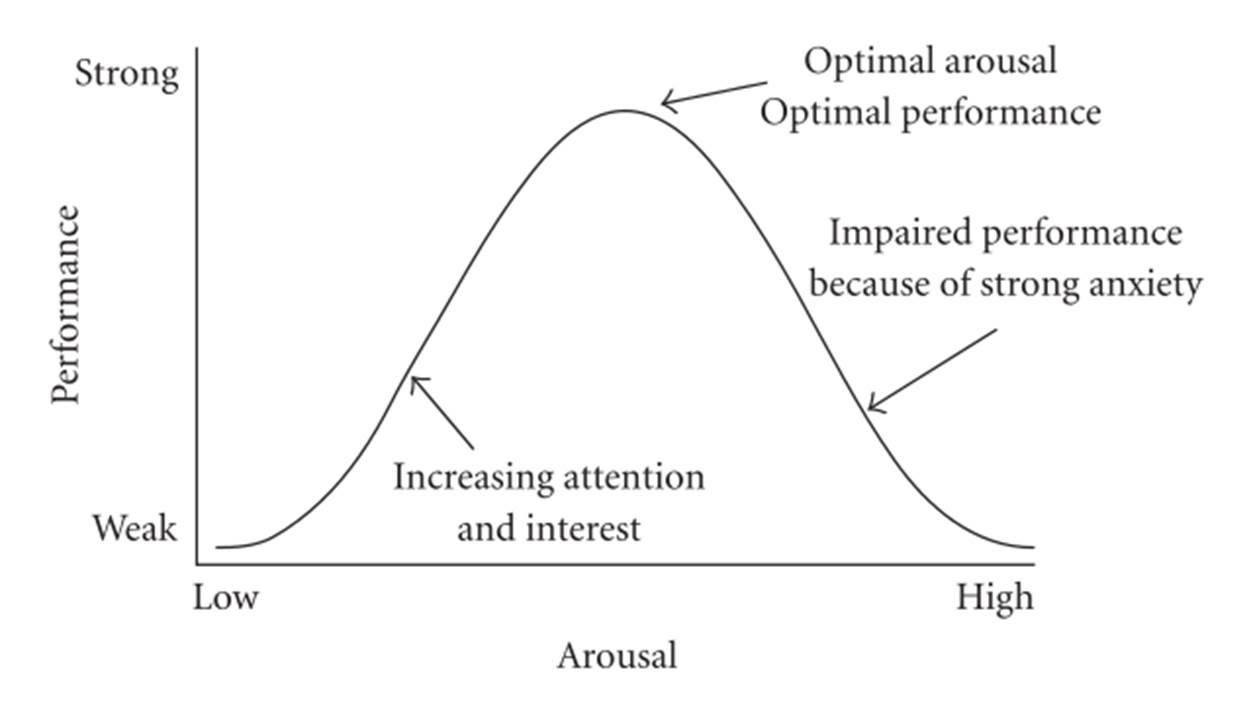
Two important types of anxiety are:
- Trait anxiety – Persistent and pervasive in the individual
- State anxiety – Temporary issue in the individual
Anxiety can lead to two types of symptoms:
- Somatic or physical symptoms
- Psychological symptoms – cognitive, emotional, affective and perceptual symptoms
SECTION 02
Generalized anxiety disorder (GAD)
- 6 months of symptoms characterized by:
- Free floating anxiety
- Inability to relax
- Motor tension and restlessness
- Constant worrying about trivial things is important feature in patients with GAD
- SSRIs are mainstay of treatment
- Pregabalin
- Buspirone
- Relaxation techniques:
- Jacobson Progressive Muscle Relaxation (JPMR)
- Body scanning
- Mindfulness
- Diaphragmatic breathing
- Guided imagery
SECTION 03
Panic disorder
- 3 important characteristics of panic disorder:
- Recurrent denovo panic attacks
- Anticipatory anxiety
- Agoraphobia
- Symptoms of a panic attack are:
- Palpitations, pounding heart, or accelerated heart rate
- Sweating
- Trembling or shaking
- Sensations of shortness of breath or smothering
- Feelings of choking
- Chest pain or discomfort
- Nausea or abdominal distress
- Feeling dizzy, unsteady, light-headed, or faint
- Chills or heat sensations
- Paresthesias (numbness or tingling sensations)
- Derealization (feelings of unreality) or depersonalization (being detached from one-self)
- Fear of losing control or "going crazy."
- Fear of dying
- Substances which can induce panic attack are:
- Carbon dioxide
- Cholecystokinin
- Sodium lactate
- Hyperventilation
- Yohimbine
- Caffeine
- Management:
- Symptomatic relief – Propranolol, Benzodiazepines
- Prophylaxis – SSRIs and other antidepressants
- Relaxation strategies
- Cognitive behavioural therapy
SECTION 04
Phobia
- Irrational fear
- 2 types of phobia are:
- Generalized phobia (Social phobia or Social anxiety disorder
- Specific phobia
- SSRIs are useful for long term prophylaxis
- Propranolol and clonazepam are useful for acute management
- Behavioural strategies for managing phobia:
- Flooding
- Systematic desensitization
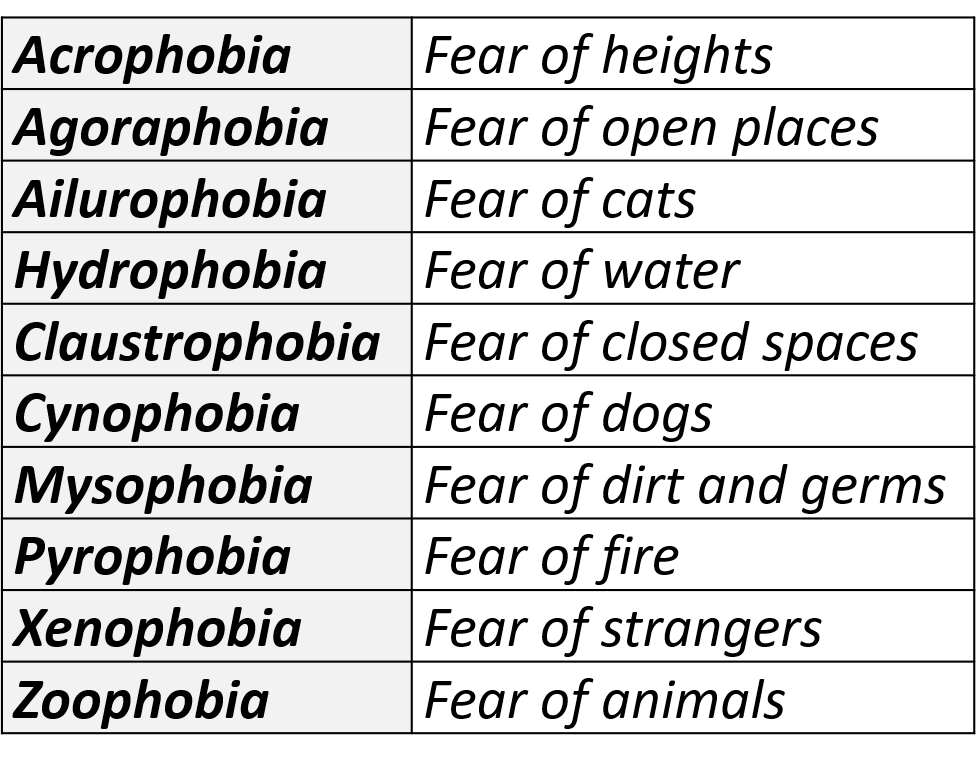
List of important specific phobias:
SECTION 05
Separation anxiety disorder
- Normal separation anxiety diminishes by 2.5 to 3 years of the child, with development of object constancy.
- Transient separation anxiety is quite common.
- For diagnosis, symptoms should be present for about 4 weeks in children and 6 months in adults.