Light therapy
Also called as phototherapy. This technique uses UV filtered white light. The patient exposes himself to the light source for 15 to 90 minutes of about 5000 to 10000 Lux.
The main indication for light therapy is Seasonal affective disorder (SAD).
It can be considered as one of the augmentation strategies for non-seasonal depression.
The other conditions where it has shown positive effect are Sleep wake disorders and seasonal variations in eating disorders or OCD.
Electroconvulsive therapy (ECT)
Possible mechanisms for ECTs effectiveness:
- Increased CNS penetration of the antidepressants and hence increasing its effects
- Post-ECT suppression
- 5-HT3 receptor changes
- Stimulation of deep brain structures
- Increase neuroplasticity (BDNF is considered as marker for effectiveness of ECT.
- Thyroxine and cholecystokinin level changes, etc.
Commonest indications for ECT:
- Active suicidal idéations and tendencies
- Severe mood disorder
- Catatonia (due to mood disorder, psychosis or organic conditions)
- Neuroleptic malignant syndrome
Importance of Seizure duration:
- Effective motor seizure should be for atleast 15 seconds.
- Effective seizure on EEG recording should be for atleast 25 seconds.
- Prolonged seizure is when the it persists beyond 180 seconds.
Position of electrode placement:
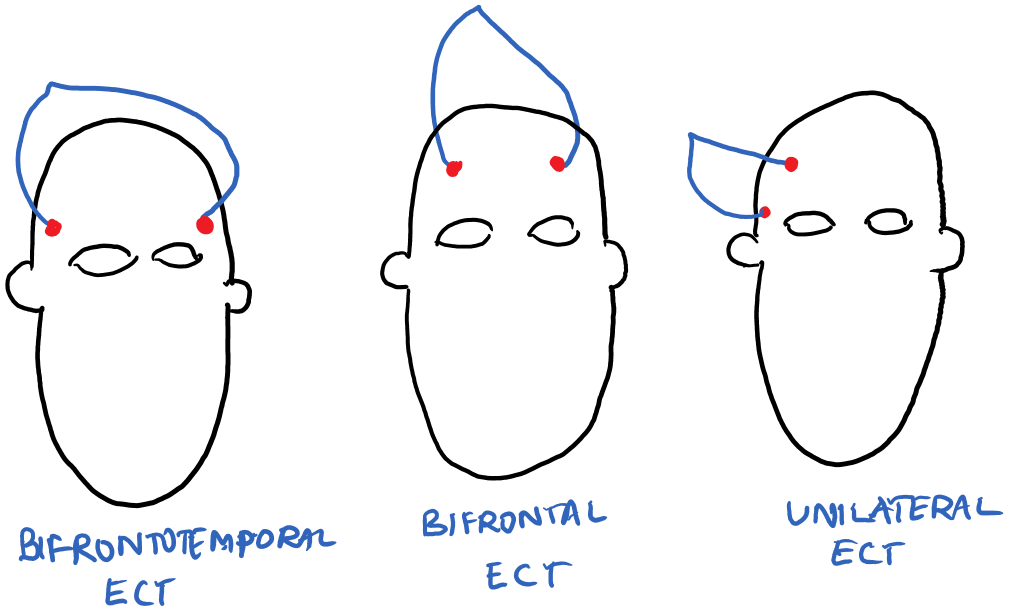
Position of the electrode placement in bifrontotemoral placement:
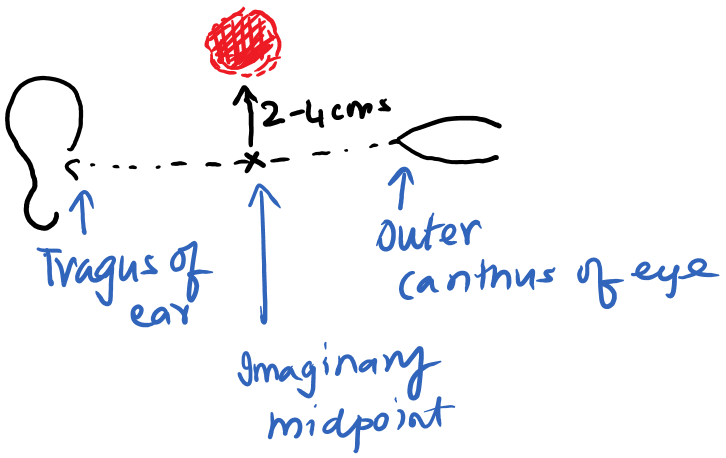
Position of electrode placement in bifrontal placement:
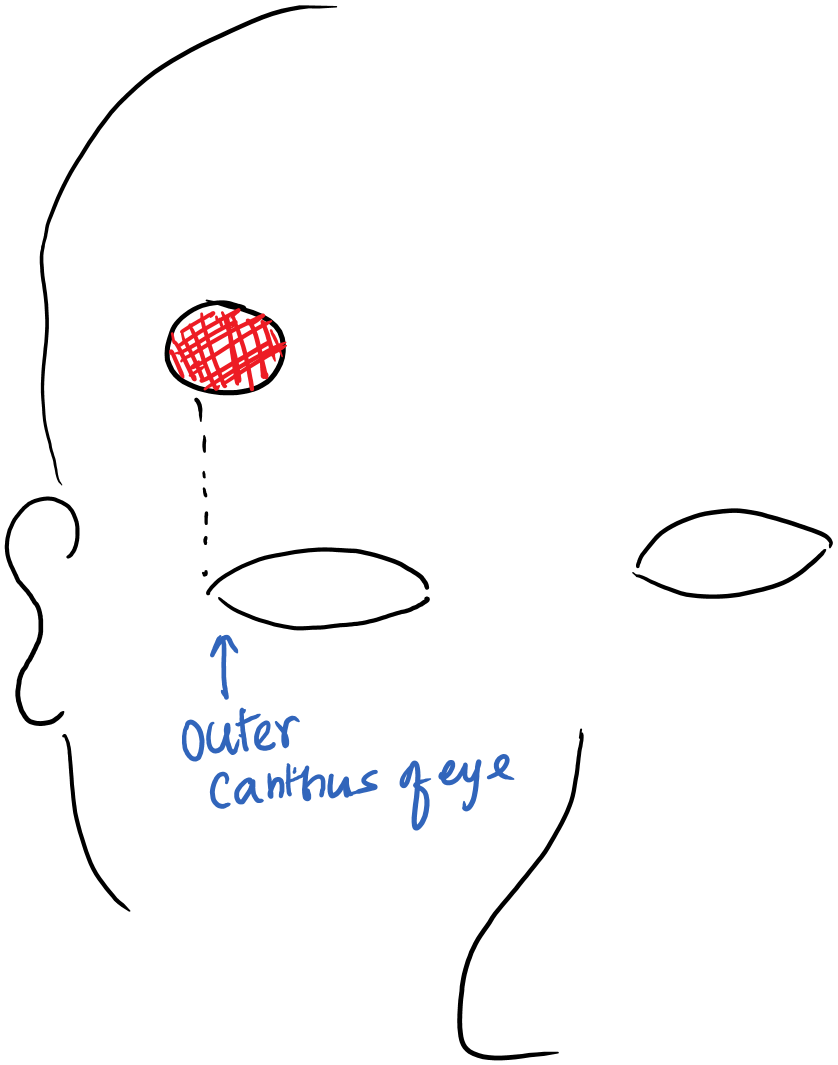
- The most common method of electrode placement is bifrontotemoral.
- In unilateral ECT, the non dominant side of the brain is commonly stimulated.
The commonest side effects of ECTs are:
- Headache (1/3 to 2/3 of the individuals can suffer more common in younger individuals, migraine patients and ketamine usage as anesthetic agent)
- Myalgia (common with depolarizing muscle relaxants use)
- Nausea
- Vomiting
- Memory disturbance (Mostly reversible within 24 - 48 hours)
Causes for a prolonged seizure are:
- Electrolyte imbalance
- Adolescence
- Drugs - Lithium. Theophilline, Ciprofloxacin
- Anticonvulsanti/alcohol/benzodiazepine withdrawal
Succinylcholine related Hyperkalaemia:
- Burns
- Prolonged immobilization
- Severe infection
- Critical illness polyneuropathy/myopathy
- Disuse atrophy
- Upper and lower motor neuron lesions
Prolonged apnoea:
- Genetic deficiency of pseudocholine esterase
- Recent OP poisoning
- High serum lithium levels
Repetitive Transmagnetic Stimulation (rTMS)
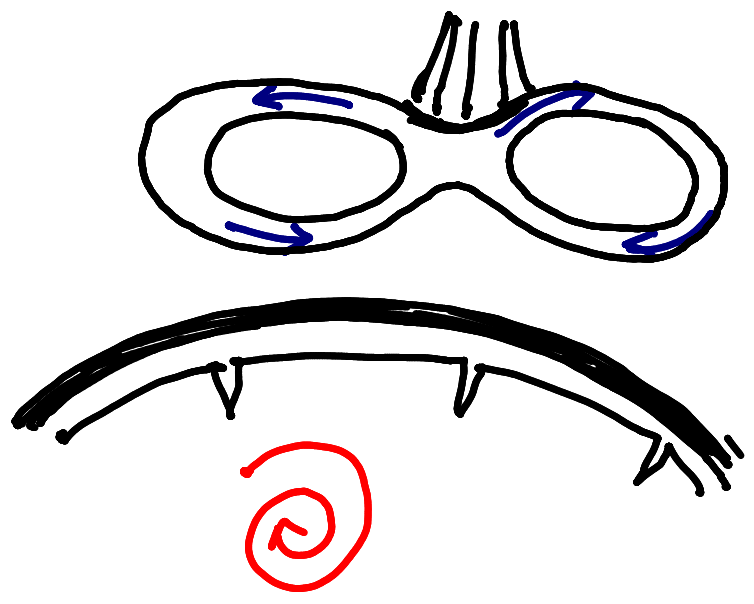
Emerging neuromodulation technique with some evidence in management of Depression and Refractory auditory hallucinations. The technique uses an 8-shaped coil to produce an alternating magnetic field and there by inducing cortical excitability in specific areas of the brain.
The advantage is rTMS being non-invasive and requires no general anaesthesia.
1.5 – 2.5 Tesla high frequency are typically used to generate the magnetic impulse. This stimuli is delivered at 10 – 60 Hz using a figure of 8 coil.
DLPFC (Dorsolateral prefrontal cortex) is the area tried to stimulate in patients with depression.
Important adverse events are:
- Local discomfort
- Headache
- Hypomania
- Seizure
Transcranial Direct Current Stimulation (TDCS)
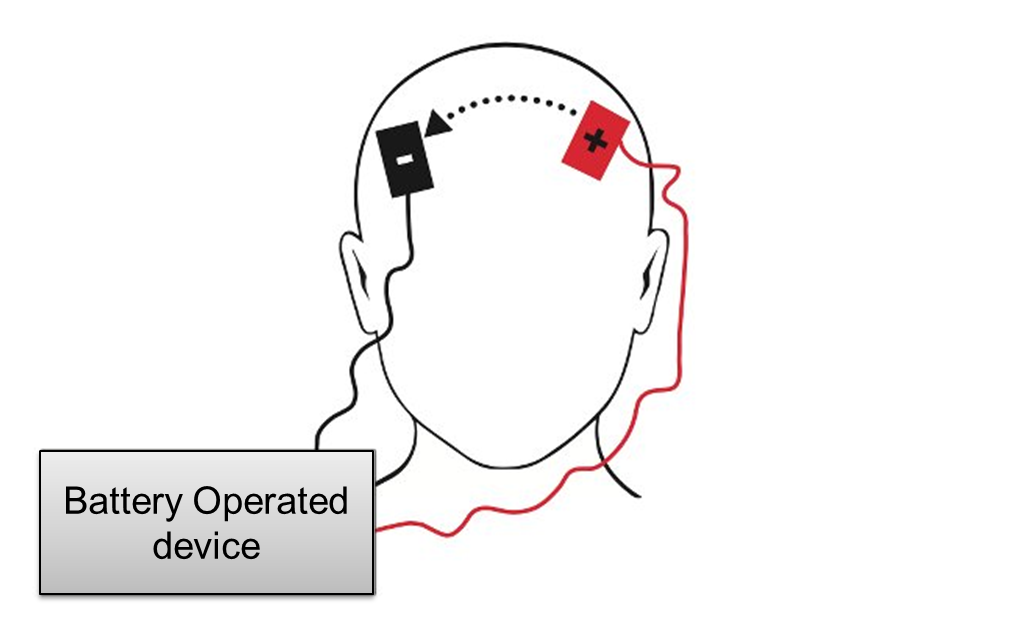
- Non-invasive brain stimulation therapy
- Low intensity current of 1 – 2 mA is passed via 2 electrodes
- Anodal stimulation is excitatory (depolarizing)
- Cathodal stimulation is inhibitory (hyperpolarizing)
- It is portable, cheap and battery operated
- Depression is the main condition where tDCS is therapeutically used
- Local application related side effects can happen – scalp reddening or itching
Vagus Nerve Stimulation (VNS)
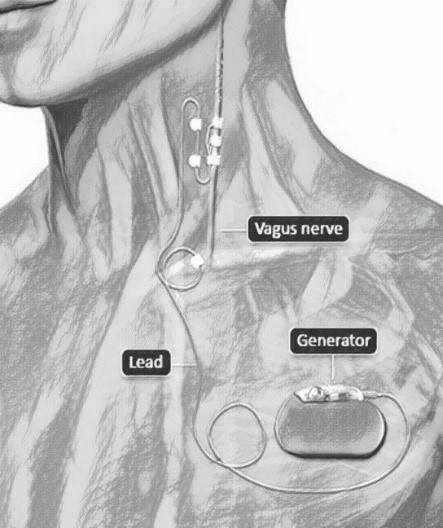
Vagus nerve being majorly afferent when stimulated by external pacemakers on the left side, modulate the tractus solitarius and associated areas – indirectly influencing the neurotransmitters and related pathways.
The 2 conditions were it has potential use are:
- Chronic treatment resistant depression
- Seizure disorder
The commonest side effects from this procedure are neck pain, bradycardia, asystole, and voice change.
The procedure even when effective takes a few months to a year to show response
Deep Brain Stimulation (DBS)
- Bilateral invasive neurosurgical procedure
- Electrodes through neurosurgical procedure are carefully placed into target brain tissue areas (bilateral).
- MRI is typically used to localize the DBS target
- Pulse generator is placed subcutaneously in the upper chest
- Important areas stimulated in DBS are:
- Ventral capsule/Ventral striatum
- Nucleus Accumbens
- Subcallosal cingulate cortex
- Ventral anterior limb of the internal capsule
- Median forebrain bundle
- Subthalamic nucleus
- Globus pallidus interna
- Thalamus
- Important conditions where DBS is useful are:
- Severe treatment resistant depression
- Severe treatment resistant OCD
- Parkinson’s disease
- Severe dystonia
- Severe tremors and movement disorders
- Adverse events of DBS:
- Haemorrhage
- Infection
- Displacement of electrode
- Delirium
- Insomnia
- Hypomania
- Epilepsy
Psychosurgery
Dr Walter Freeman, neuropsychiatrist, is considered the father of lobotomies. He was a zealous (rather overzealous) promoter of lobotomies. He developed the ice pick method (used ice cones) of orbitofrontal lobotomies. He used to do more than 20 surgeries per day and conduct it on out patient basis. Crude methods and overzealous attempts made lobotomies to get into disrepute.
Egas Moniz, obtained Nobel prize in medicine in 1949 for his psychosurgery work.
There are 3 neurosurgical procedures more commonly considered:
- Cingulotomy
- Capsulotomy
- Subcaudate tractotomy
The exact mechanisms are not known, but their role in resistant OCD and Depression is known.
Capsulotomy is more useful in depression, the other two are more useful in OCD.
Limibic leucotomy is a procedure which combines both anterior cingulotomy and subcaudate tractotomy.