Delirium
Classical features of Delirium:
- Acute onset
- Altered sensorium
- Autonomic dysfunction
- Sleep reversal
- Sun downing
- Slowing of EEG waves (Generalized)
Mini Mental Status Examination
Mini-Mental Status Examination (MMSE) is a bedside examination tool developed by Folstein. It is an easily administered and an important clinical tool to grossly understand brain functioning. The 5 domains that it covers are:
- Orientation
- Registration
- Attention
- Recall
- Language
It is commonly administered in patients with dementia and delirium. The total points of the scale are 30. The only drawback is that scale is biased more toward dominant lobe.
Cortical and subcortical symptoms
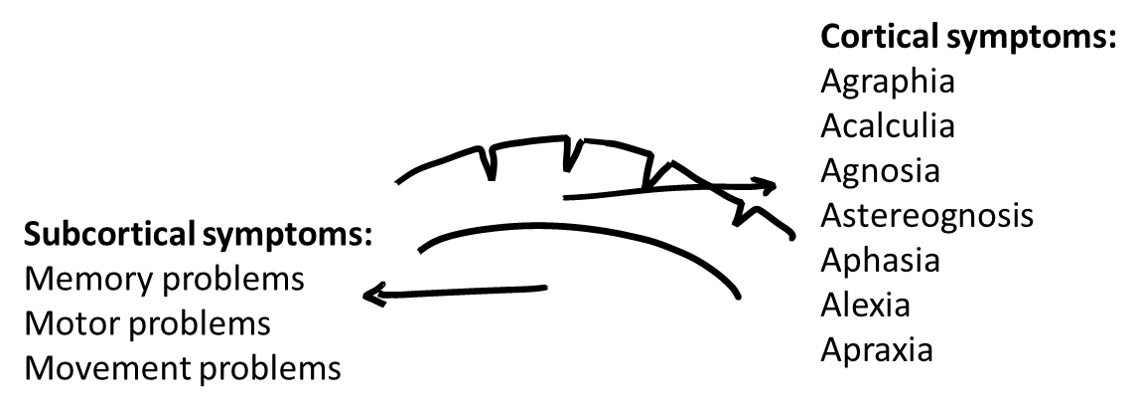
Frontal lobe symptoms
- Apathy
- Avolition
- Impulsivity
- Perseveration
- Echolalia
- Echopraxia
- Personality change
- Social incontinence
- Disinhibition
Aphasia
Check out the video on Aphasia:
Part 1 - https://youtu.be/Ybec8irnAhI
Part 2 - https://youtu.be/ZZLoeJUl76k
Part 3 - https://youtu.be/cju2ro1EDXQ
Reversible Dementia
Typically dementia is a chronic progressive neurodegenerative condition. But some of the following are examples of reversible dementia.
- Vitamin B12 deficiency
- Hypothyroidism
- Subdural haemorrhage
- Early neuroinfections
Alzheimer disease
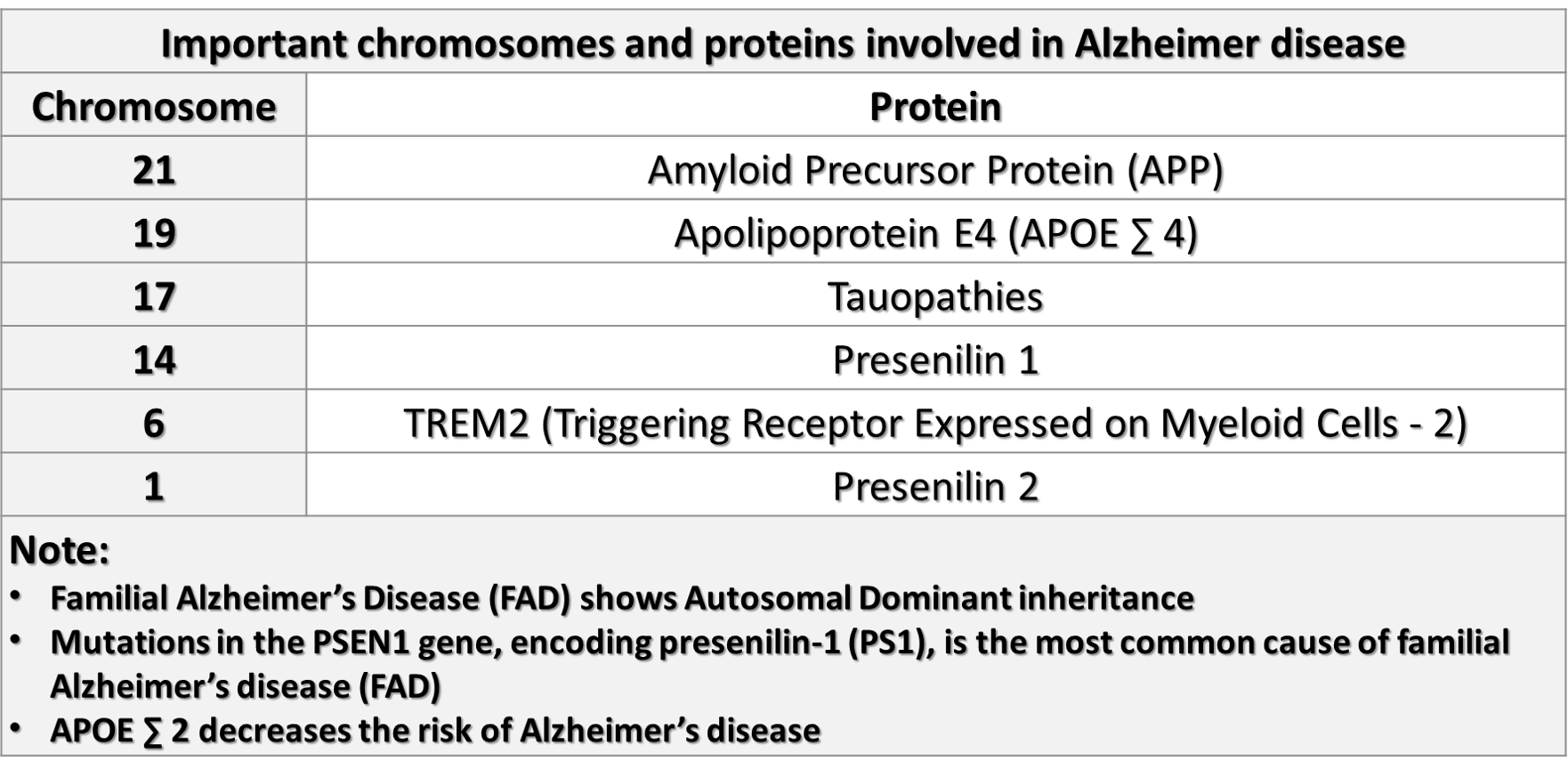
Alzheimers dementia is the most common type of dementia occuring in people 65 years and above. The incidence increases with every passing decade after 65 years 1-2% of people above 65 years and 35-50% of the people above 85 years.
There are 2 important characteristic features:
- Amyloid plaques (composed of β-amyloid)
- Neurofibrillary tangles or neuritic plaques (composed of phosphorylated “Tau proteins”)
The risk factors to develop Alzheimer’s dementia are:
- Advancement of age
- Women
- Famify history
- Low level of education
- Diabetes mellitus
- Hypertension
- Coronary artery disease
- Significant head injury (single/repeated)
- Down’s syndrome
- Nicotine smoking
FLUBETAPIR PET scan is diagnostic of Alzheimer’s disease.
Vascular dementia
- Also called as the multi-infarct dementia
- Associated with minimal extrapyramidal symptoms
- Presence of neurological deficits
- Important risk factors:
- Smoking
- Males
- Dyslipidemia
- Diabetes
- Hypertension
- Homocystinuria
- Cardiac arrythmias
- Prosthetic cardiac valves
- Step like deterioration
Lewy Body Dementia
- A cortical type of dementia
- Characteristic presence of excessive neurodegenerative body called 'Lewy body'. It is composed of α-syncuclein and is an intracellular accumulation
- Prominent visual hallucinations
- Excessive sensitivity to even small doses of antipsychotics, leading to severe extrapyramidal symptoms
Huntington Chorea
- Autosomal dominant disease
- 4th decade presentation
- 4th chromosome
- Dementia and psychosis are common
- CAG trinucleotide repeats are seen
- Caudate nucleus and Putamen are common sites of lesion
- GABAergic neuron degeneration
- Genetic anticipation is a common phenomenon
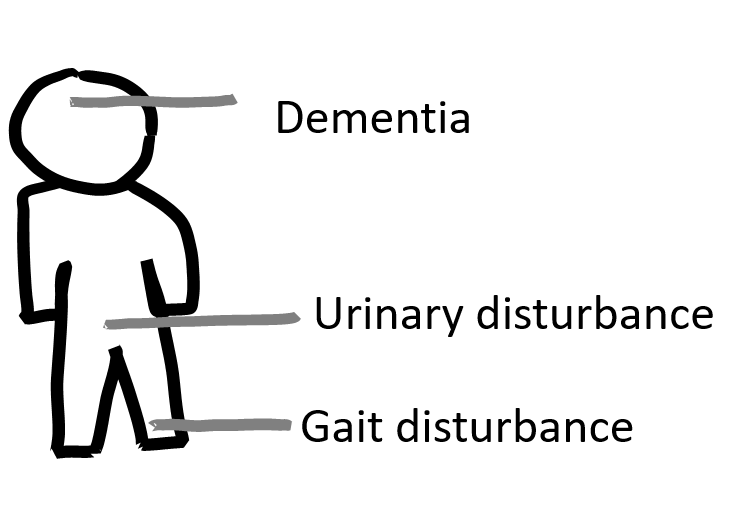
Normal Pressure Hydrocephalus
Gerstmann syndrome
- Dominant parietal lobe lesion
- Characterized by:
- Agraphia
- Right left confusion
- Acalculia
- Finger agnosia
Supranuclear Palsy
Supranuclear palsy is an example of subcortical type of dementia, characterized by:
- Dementia
- Axial dystonia
- Pseudobulbar palsy
- Vertical gaze abnormalities
- Extrapyramidal symptoms
- Eyelid abnormalities
Medications used in Dementia
Acetylcholine esterase inhibitors:
- Donepezil
- Galantamine
- Rivastigmine
NMDA antagonist:
- Memantine
Symptomatic treatments could be by use of small dose of antipsychotics to manage behavioural problems related to dementia. Beware of sudden cardiac deaths related to antipsychotic use in elderly.
Insomnia is managed with benzodiazepines and Z class of drugs. Beware of these drugs increasing the potential of fall in the elderly.
Cluster Headache
Check out this video on Cluster Headache @ https://youtu.be/oDMdO86GKYI
Chronic Fatigue Syndrome
- Also called as Myalgic encephalomyelitis
- More common in the age group of 20 - 40 years
- More common in females
- No clear accepted etiology
- characterized by fatigue, which is
- More than 6 months
- Having clear onset
- Not associated with exertion
- Not relieved with rest
- Associated functional impairment
- Atleast 4 or more of other associated symptoms of the following:
- Sleep disturbance
- Headache
- Concentration and cognitive issues
- Tender lymph nodes
- Sore throat
- Myalgia
- Joint pain
- Post exertion malaise greater than 24 hours
Locked in syndrome (LIS)
A large bilateral ventral Pontine lesion is the cause for LIS.
The most common reason being ischemic lesion due to thrombosis in the basilar artery. The other possible reasons include - hemorrhage, trauma, central pontine myelinosis, encephalitis.
This type of lesion affects both the Corticobulbar and Corticospinal tracts, there by leading to quadriplegia, lack of expression and speechlessness. Horizontal eye movements are affected, where as vertical eye movements and eyelid movements are preserved.
These individuals are very much alert and with intact higher mental functioning. They communicate with eye and eyelid movements.
The three types of LIS are:
- Complete or total LIS: Quadriplegia and anarthria. No eye movement.
- Classic LIS: Preserved vertical eye movement and blinking.
- Incomplete LIS: Recovery of some voluntary movements in addition to eye movements