Spectrum of substance use
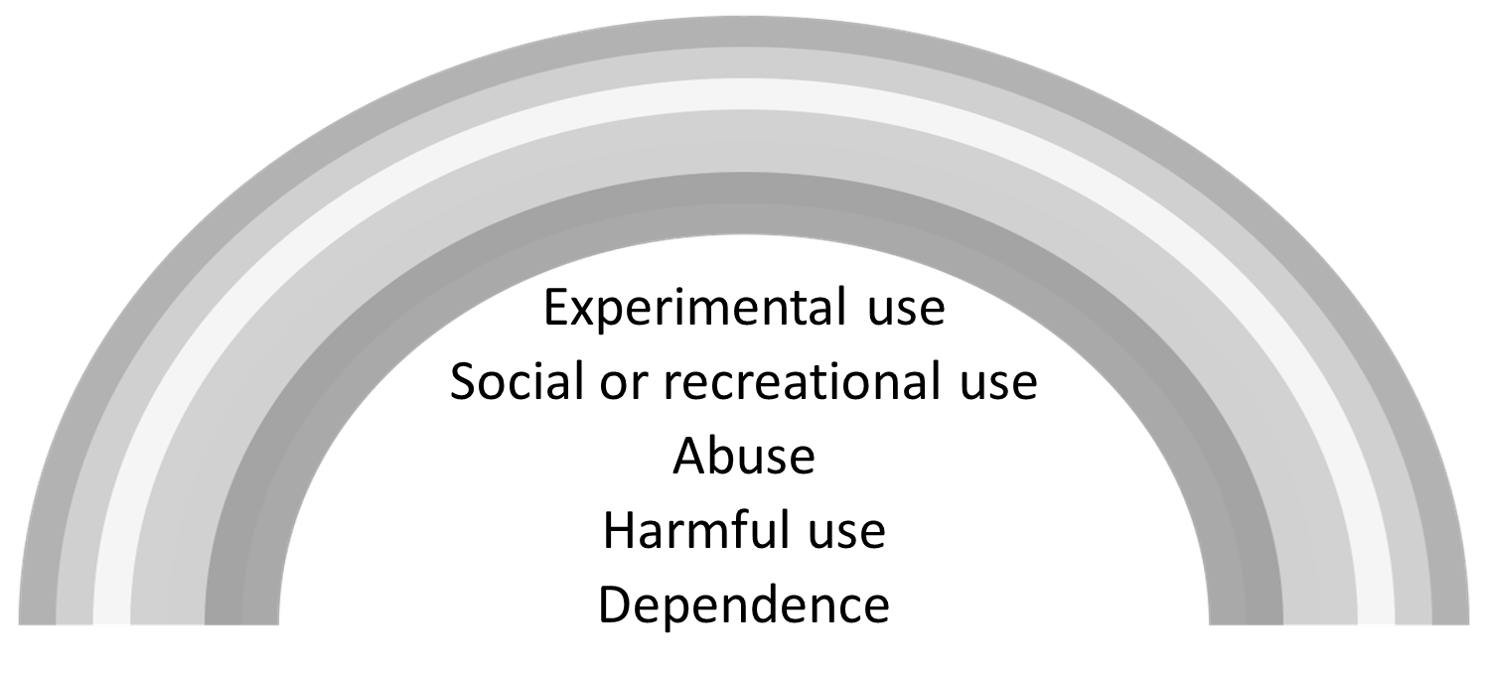
Note:
(1) A teetotaler is someone who does not drink any alcoholic beverages.
(2) The newer gateway drug is cannabis.
(3) About 10% of the regular users go on to become dependent on the substance.
Features of dependence or addiction
There are 6 important features:
Craving
Tolerance
Withdrawal
Tolerance
Salience
Knowledge of harmful use
The 3 important D's of addiction:

Reverse tolerance:
- It is also called as hypersensitization or sensitization.
- It is characterized by extreme sensitivity to small dose of substances in some susceptible individuals.
- It is commonly described in cocaine psychosis, even though it can happen with any substance.
List of substances commonly causing psychosis
- Alcohol
- Cannabis
- Cocaine (Magnan syndrome)
- Amphetamine (Paranoid schizophrenia like psychosis)
- LSD
- Phencyclidine
- Ketamine
Hemp Insanity is seen in cannabis use.
Speed Ball = Cocaine + Opioid.
Phencyclidine (Angel dust) is a glutamate antagonist.
Cocaine’s long term use can lead to perforation of the nasal septa. Non-hemorrhagic cerebral infarctions due to vasoconstriction is the most common cerebrovascular diseases associated with cocaine.
Mellanby effect:
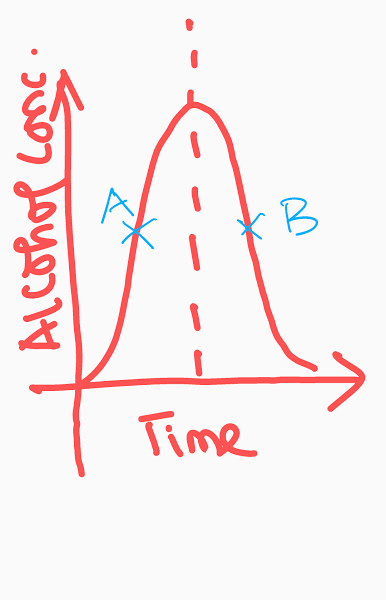
During consumption of alcohol the concentration levels increase and then after cessation of consumption the concentration of alcohol starts decreasing over a period of time. Mellanby effect is the influence or effect of alcohol being more while the titres are raising (while consuming) than while the tires are decreasing (wearing off period) even thought the net blood alcohol concentration is the same.
See the picture below to understand better, the point A and point B have the same concentration, but the effect at point A would be greater than point B.
Alcohol related complications
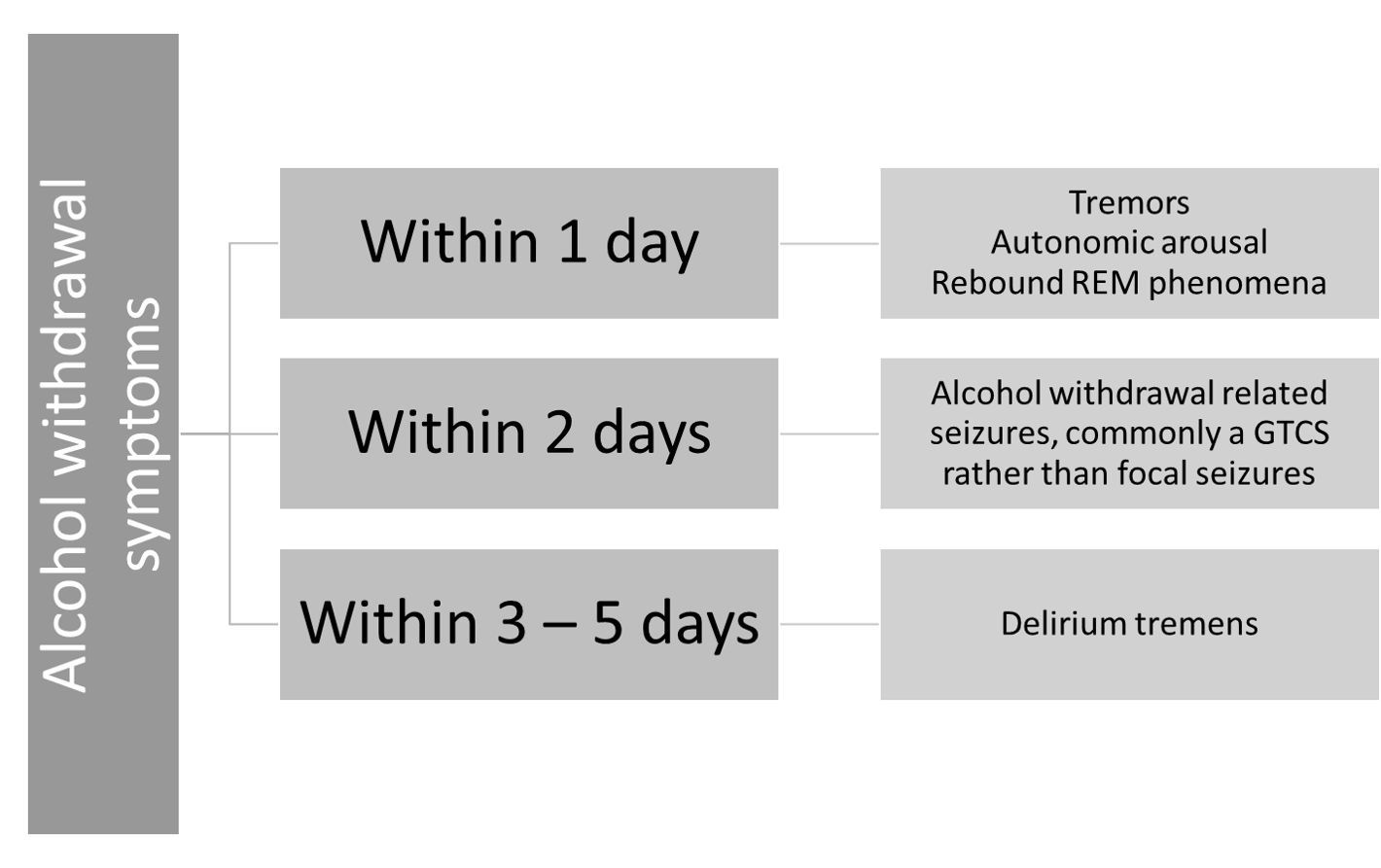
Alcohol related withdrawal:
Pathological Drunkenness:
It is also called as Black out.
It is characterized by:
Amnesia
Aggressive behaviour
Reaction is to intake of small quantity of alcohol
It is considered as a reversible state of brain damage. The person could improve with abstinence from alcohol.
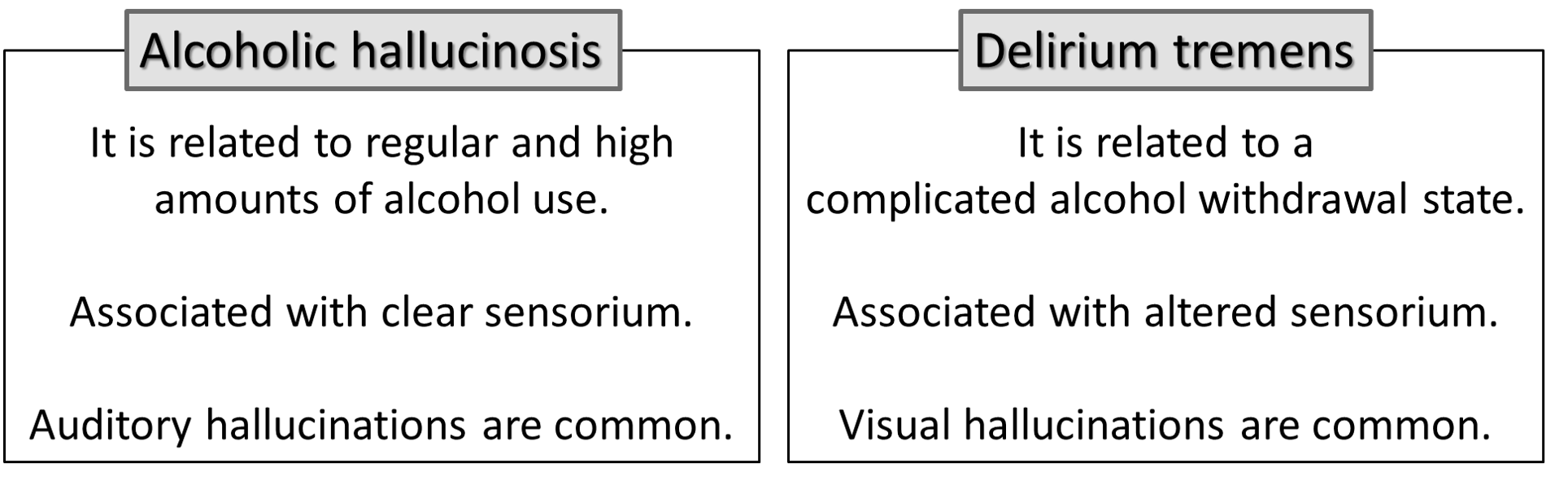
Alcohol is related to two common psychotic presentations:
(1) Alcoholic hallucinosis
(2) Delirium tremens
Note:
Lilliputian hallucinations are seen in Delirium tremens.
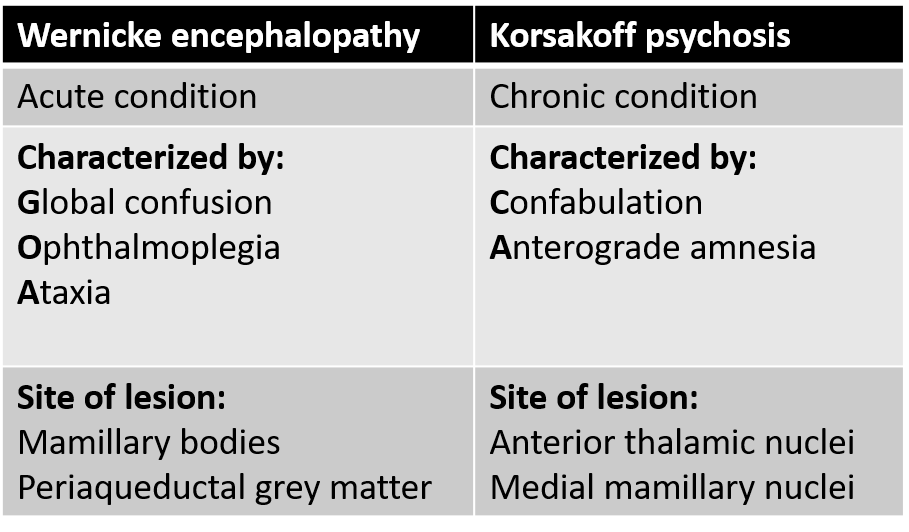
Wernicke encephalopathy vs. Korsakoff psychosis:
Cannabis
Cannabis is not necessarily benign!
2.5% of the world population smokes cannabis. More common in males and young individuals. It is termed as the ‘newer gateway drug.
Cannabis is highly lipid soluble. having poor bioavailability of 25% (inhalation increases bioavailability), and half life of 7 days.
The common physiologic effects or cannabis are:
Cannabis can cause change in perception, appetite and memory
Tachycardia
Postural hypotension
Reddening or conjunctiva (due to vasoldialatation)
Cannabis can cause the foliowing neuropsychiatric symptoms:
Cognitive deficits
Panic attacks
Anxiety disorders
Mood disorders
Precipitate Schizophrenia
Substance Induced psychosis
Amotivation syndrome (lack of energy and motivation)
Hemp insanity
(Earlier the age of the Individual while using cannabis, the more is the chance of neuropsychiatric adverse events)
Medical Cannabis has been in limelight in the recent times.
Cannabis has two main components: Tetrahydrocannabinol (responsible for psychotropic effects) and Cannabidiol (responsible for most of the medical effects).
It has been tried in various medical conditions like:
1. Chemotherapy induced nausea and vomiting
2. Chronic pain, especially of neuropathic origin
3. Muscular spasticity
4. Anorexia related to Cancer/HIV and many others
But there has been NO SIGNIFICANT benefits except in the handling chemotherapy induced nausea and vomiting, showing most favorable results.
On the contrary, medical cannabis is known to cause adverse events in the form of headache, nausea, weight gain, hallucinations etc.
Synthetic Cannabis is already available as drugs in the form of Nabilone and Dronibinol.
Note:
The three species are: Sattiva. Indica and Ruderalis (SIR)
Opioids
Opioid intoxication leads to pupilllary constriction.
Important drugs used in opioid use management are:
Clonidine - detoxification agent.
Methadone - Synthetic narcotic and useful for harm reduction or substitution therapy.
Levomethadyl (LAAM) - An opioid agonist, discontinued now due to potential to lethal cardiac arrythmias.
Buprenorphine - Opioid agonist, used for harm reduction and substitution therapy.
Date rape drugs
The technical term equivalent for the media term of Date rape is drug facilitated sexual assault (DFSA). Any drug changing ones judgement and/or behaviour can be considered to have a potential to become a date rape drug.
The common ones are:
Flunitrazepam (Rohypnol)
Gammahydroxybutyrate (GHB)
Ketamine
ChloraI hydrate
Alcohol
Temazepam
Midazolam
Zolpidem
Methamphetamine
(The first four mentioned are very classical examples in most books/journals and other resources)
CAGE questionnaire
It is a screening tool with 4 questions requiring YES or NO answers. If two questions have yes answers, then further evaluation for alcoholism is mandated.
The 4 questions are:
1. Have you ever felt you needed to Cut down on your drinking?
2. Have people Annoyed you by criticizing your drinking?
3. Have you ever felt Guilty about drinking?
4. Have you ever felt you needed a drink first thing in the morning (Eye-opener) to steady your nerves or to get rid of a hangover?
CAGE is the acronym for Cut down, Annoyed, Guilty and Eye opener.
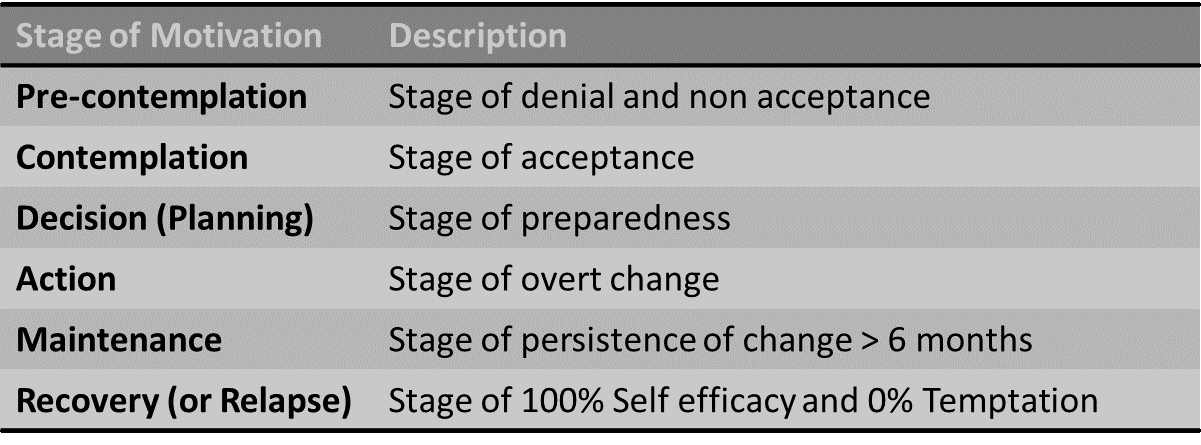
Stages of motivation (change)
The stages of changes or motivation was a concept given by Prochaska and deClemente, to assess the motivation of an individual seeking treatment of Substance use disorders. It is called as ‘trans-theoretical model’.
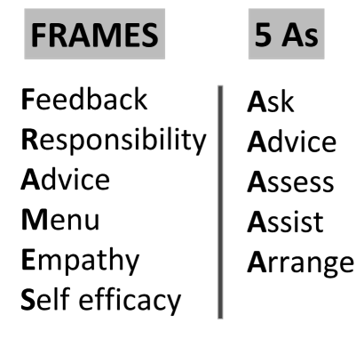
Important brief interventions
Disulfiram
Disulfiram is the first pharmacological agent to be approved by FDA in 1951 for alcohol dependence. It is an aversive or a deterring agent.
It is an Irreversible inhibitor of Aldehyde dehydrogenase, leading to increased acetaldehyde levels if alcohol is consumed. This results in Disulfiram Ethanol Reaction (DER). It is characterized by nausea, flushing, hypotension. and palpitations.
Disulfiram blocks dopamine beta hydroxylase thereby causing increase in dopamine. This can sometimes precipitate or worsen psychosis.
Supervised Disulfiram can play a role in enhancing abstinent time and time to relapse. It does not have a role in craving. It is typically used in highly motivated individuals.
Disulfiram is started atleast after 24 hours of the last drink.
250 mg per day is the common dosage prescribed. But. it is always started after explaining possibility or DER and obtaining the consent or the patient. Remember it is preferable to use in individuals who are motivated.
Common side effects are drowsiness and gastric irritation. Other adverse effects reported include a garlic like or metallic after taste. bad breath and body odour, gastrointestinal distress, headache, impotence, and allergic dermatitis. Peripheral and optic neuropathies. psychotic reactions, and hepatotoxicity may occur
There are multiple drugs which can cause Disulfiram Ethanol-like Reaction. Some of the common ones are:
- Metronidazole
- Tinidazole
- Chlorpropamide
- Griseofulvin
Disulriram use can raise the levels/enhance effects of benzodiazepines, paraldehyde, phenytoin, and warrarin. Hence, be careful while administered concurrently.
Calcium Carbimide is like Disulfiram, another deterring agent.
Drugs causing Disulfiram reaction:
o Levamisole
o Cetamandole
o Cefazolin
o Cefmenoxime
o Ceitriaxone
o Letarnoxef
o Chlorpropamide
o Griseofulvin
o Ketoconazole
o Procarbazine
o Furazolidone
o Mepacrine
o Metronidazole
o Nifuratel
o Linidazole
o Tolazoline
Note: Formulations of Ritonavir, Tipranavir, Opinavir can contain alcohol leading to DER reaction when taken by a patient on Disulfiram.
Anticraving drugs in Alcohol
Acamprosate
Naltrexone
Topiramate
SSRIs
Ondansetron
Baclofen
Drugs used in Nicotine cessation
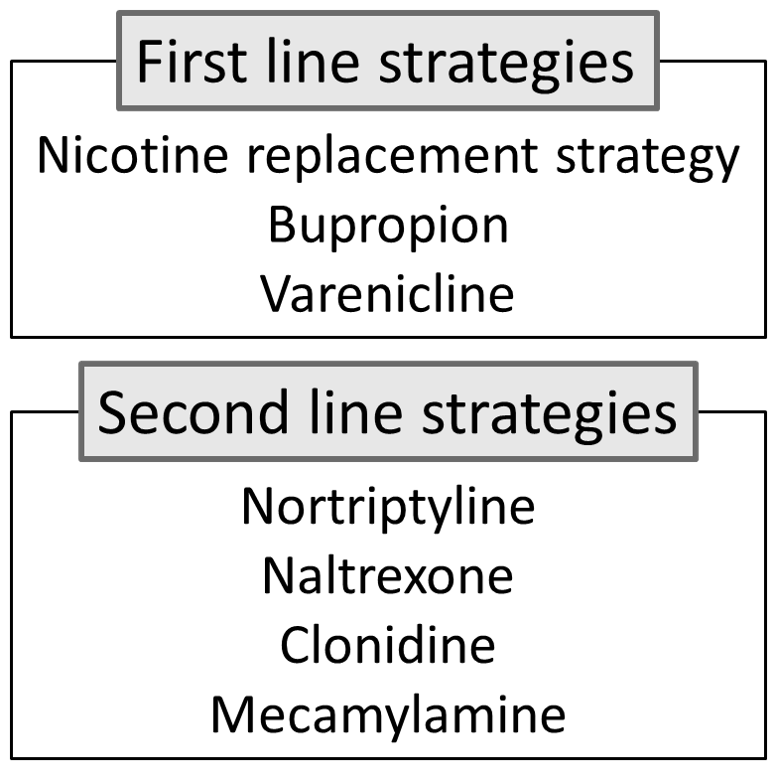
Varenicline is a α4β2 partial agonist.
Common modes of nicotine replace strategies consider are:
1. Patch (7 mg, 14 mg and 21 mg)
2. Gum (2 mg and 4 mg)
3. Lozenges (2 and 4 mg)
Psychological interventions in SUD
- Motivational interviewing
- Assertiveness training
- Urge surfing
- Craving management
- Relapse prevention
4 Ds of carving management:
Drink water
Deep breathing
Delaying gratification
Distract oneself