Disorder of Intellectual Development
It is also called as Intellectual Developmental Disorder (in DSM5). The older pejorative perm was mental retardation.
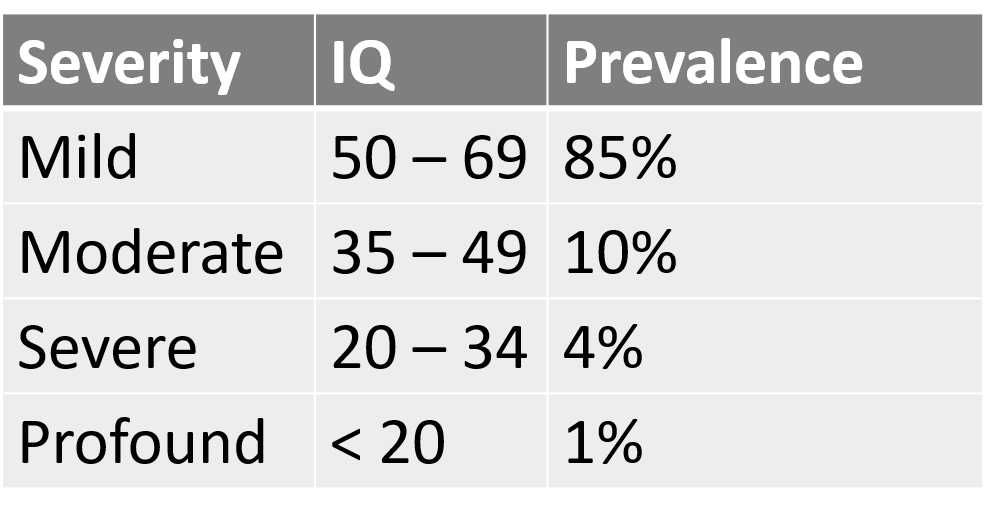
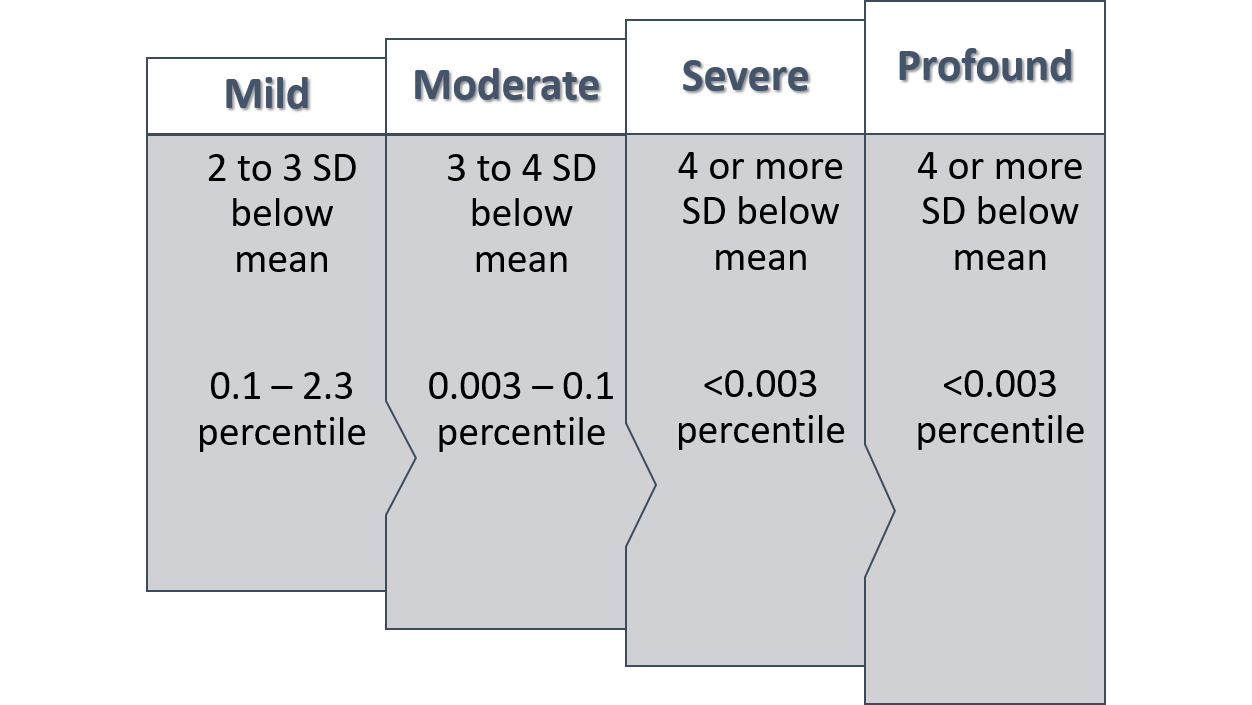
ICD 11 emphasizes less on IQ score and talks about percentile deviation from the mean to categorize severity and the emphasis is on adaptive functioning.
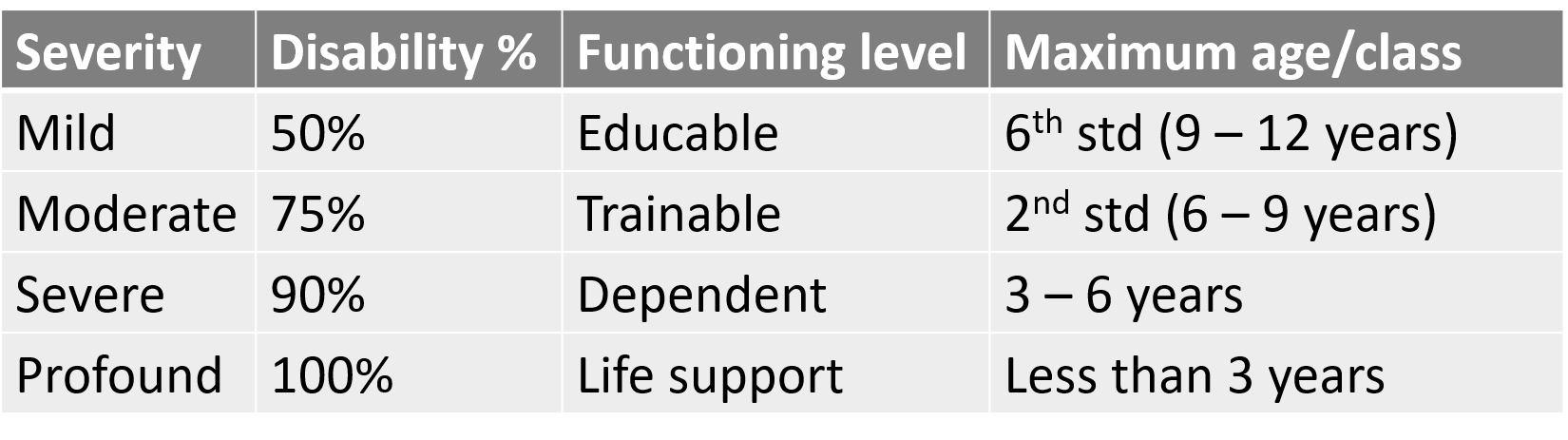
Understanding the ability of the functioning, mental age, and percentage of disability:
Autism spectrum disorder (ASD)
The 3 S's characteristic of Autism spectrum disorder is:
Stereotypic behaviours
Speech problems
Socialization deficits
Commonly the children present around 2-3 years of age.
Autism spectrum disorders are more common in male gender, except Rett syndrome which is exclusively seen in girls.
Children with Autism, commonly present with the following clinical symptoms:
- Poor eye contact with others
- Play alone than with others
- Like revolving objects more
- Do not like change in environment or even toys
- Social skill deficits
- Smell objects and other items their environment
- Speech problems, echolalia
- Treat other humans as objects
Screening or rating tools used in Autism:
- M - CHAT (Modified Checklist for Autism in Toddlers)
- CARS (Childhood Autism Rating Scale)
- ABC (Autism Behaviour Checklist)
Characteristic features of various ASD's
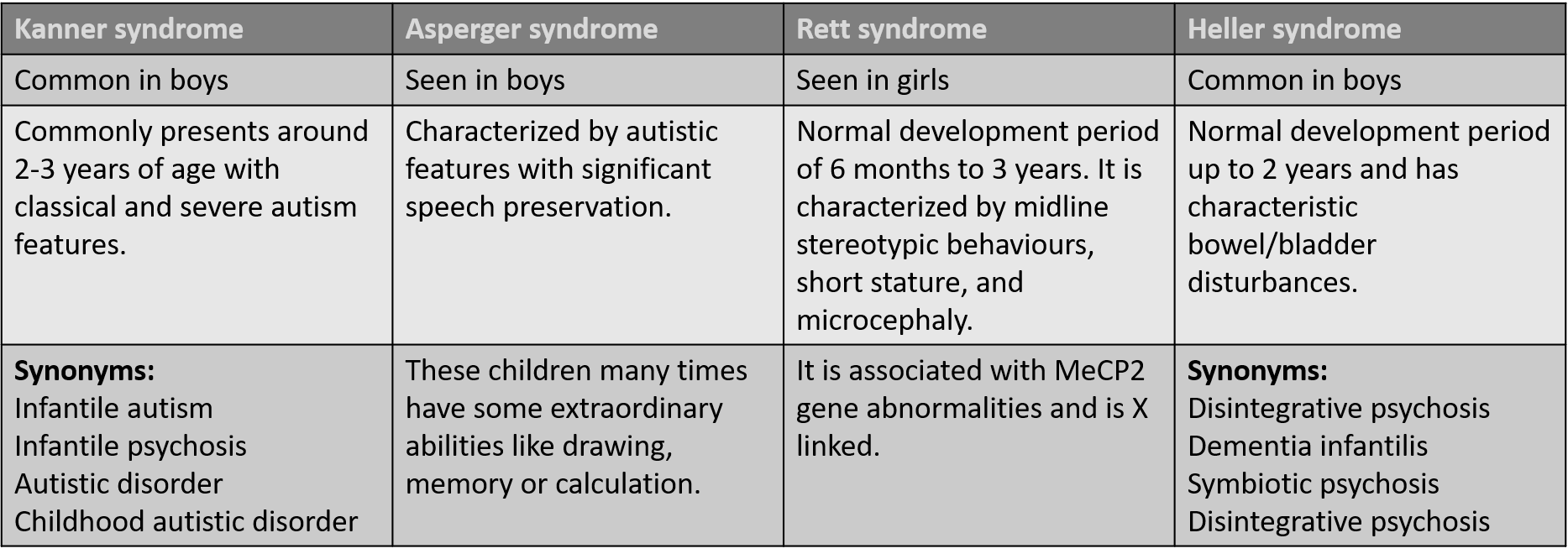
Retts syndrome is associated with MECP2 gene on the X chromosome. It codes for the protein Methyl Cytosine Binding Protein 2. Despite it being a genetic illness, the chances of inheritance is about 1% only.
Attention deficit hyperactivity disorder (ADHD)
Children with ADHD have symptoms onset less than 12 years of age. The symptoms belong to 3 important domains:
1. Attention deficit
2. Hyperactivity
3. Impulsivity
6 symptoms related to the above domains in atleast 2 different settings are required for diagnosis of ADHD.
40-60% of children continue to have significant ADHD symptoms as adults. A diagnosis of adult ADHD requires just 5 symptoms.
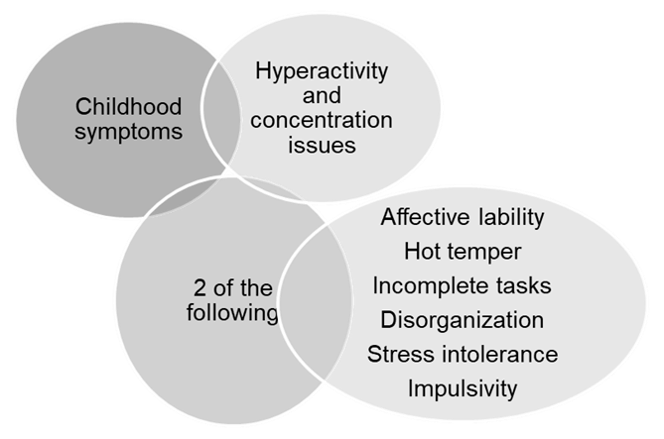
Utah's criteria for Adult ADHD:
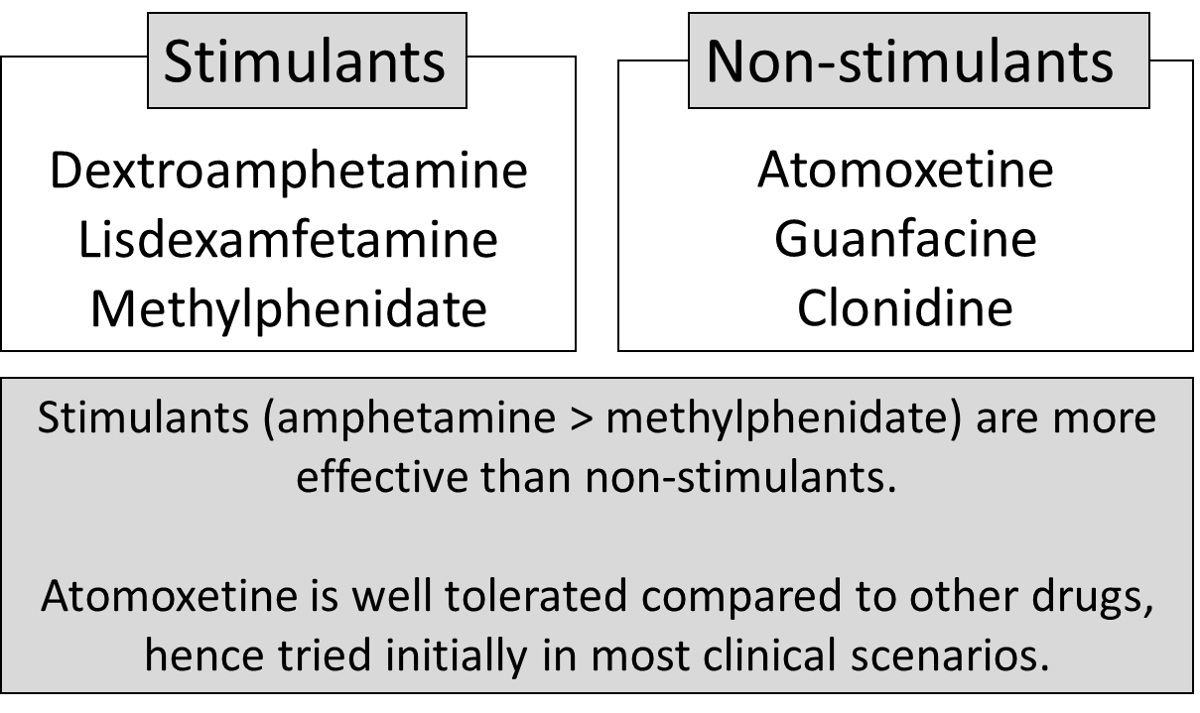
Pharmacological management of ADHD:
Oppositional Defiant Disorder (ODD)
It is characterized by oppositional and defiant behaviours in children, commonly seen before 10 years of age. A type of ODD is more commonly seen in adolescence and called Adolescent onset ODD.
More common in boys (M:F::3:1)
It is characterized by atleast 6 months of persistent patterns of behaviours characterized by:
1. Hostility
2. Negativity
3. Defiance
Conduct disorder (CD)
These are children having 6 months and more symptoms of:
1. Deceitful behaviour
2. Destructive behaviour
3. Violating rights of others
These child are known to show truancy (bunk classes less than 13 years of age) or have had episodes of absconding from home atleast once (>24 hours) or more than twice (<24 hours).
Note:
Antisocial personality disorder (ASPD) is diagnosed when individuals are 18 years and above.
Fetal Alcohol Syndrome
Fetal alcohol syndrome is seen in children of 2-10% of alcoholic mothers. Mostly characterized by:
- Intrauterine growth retardation
- Microcephaly
- Microphthalmia
- Midline face hypolasia
- Short palpebral fissures
- Thin upper lip
- Smooth and/or long philtrum
- Developmental delays
- Attentional deficits
- Learning disabilities
- Hyperactivity
Parenting styles
Parents oscillate among the following domain ranges in their parenting styles.
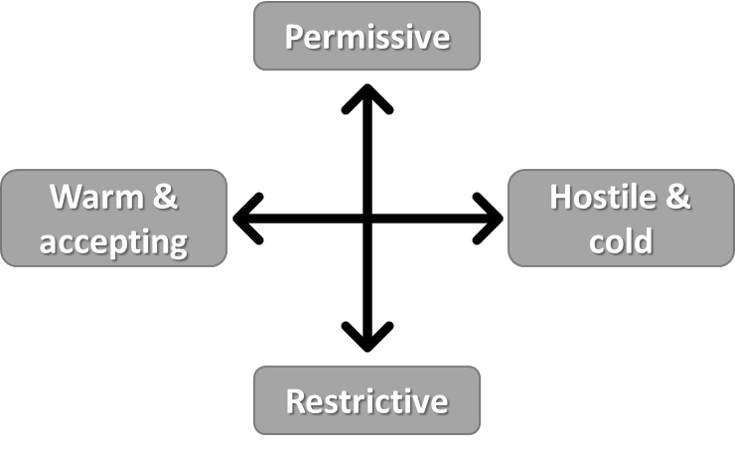
Important types of parenting are:
- Permissive
- Neglected
- Authoritative
- Authoritarian
- Punitive