Somatic symptom disorder
As per ICD 11, the newer term is Bodily Distress Disorder.
The older terms used were Briquet syndrome, somatoform disorder, and somatization disorder.
Somatization is the defence mechanism seen in these individuals, characterized by psychological stress being subconsciously expressed in the form of multiple somatic complaints and a preoccupation with bodily experiences.
It is characterized by:
- Symptom preoccupation
- Chronic multisystemic somatic complaints
- Normal investigations and clinical examination
- Presence of psychosocial stress
- Multiple specialist consultations
These patients are commonly managed by using antidepressants and reattribution therapy.
Illness anxiety disorder
It is also called as Hypochondriasis.
Illness anxiety disorder is characterized by:
- More than 6 months of symptoms
- A preoccupation and exaggerated concern about having an illness
- Multiple doctor consultations
- Seeking specific diagnosis or investigations
Note:
Even in the presence of an illness, this disorder can be diagnosed if there is extreme exaggeration compared to the reality.
Example:
A patient with precancerous lesion is worried as if he has terminal stage of cancer.
Factitious disorder
It is also called as Munchausen syndrome.
3 typical or characteristic features are:
- Simulation of illness
- Pseudologia fantastica
- Peregrination (excessive and elaborate travel seeking medical attention)
Following repeated surgical intervention, these individuals can have gridiron abdomen.
Note:
An adult feigning an illness in the dependent child and bring for consultation is called as Munchausen by proxy.
Dissociative disorder
Common dissociative disorder presentations are:
- Dissociative amnesia
- Dissociative fugue
- Conversion disorder
Dissociative disorder is characterized by circumscribed amnesia of the traumatic memory.
Dissociative fugue is characterized by loss of one's primary identity and associated purposeful wandering.
Conversion disorder is characterized by the bizarre motor or sensory neurological presentation, which cannot be explained by underlying neuro anatomical, physiogical or pathological explanations. Some of these individuals can present with bizarre gait and is called as Astasia Abasia.
La belle indifference is seen in patients with dissociative disorder. It is the disconnect in the emotions of the individual and the associated severity of symptom presentation.
Ganser syndrome
It was initially described to happen in prisoners under trial. But, currently it is noticed that 40-50% of individuals with Ganser syndrome presentation have an underlying organic cause for their presentation.
The important features of Ganser syndrome are:
- Hallucinations
- Approximate answers (Vorbeireden)
- Confusion
- Conversion symptoms
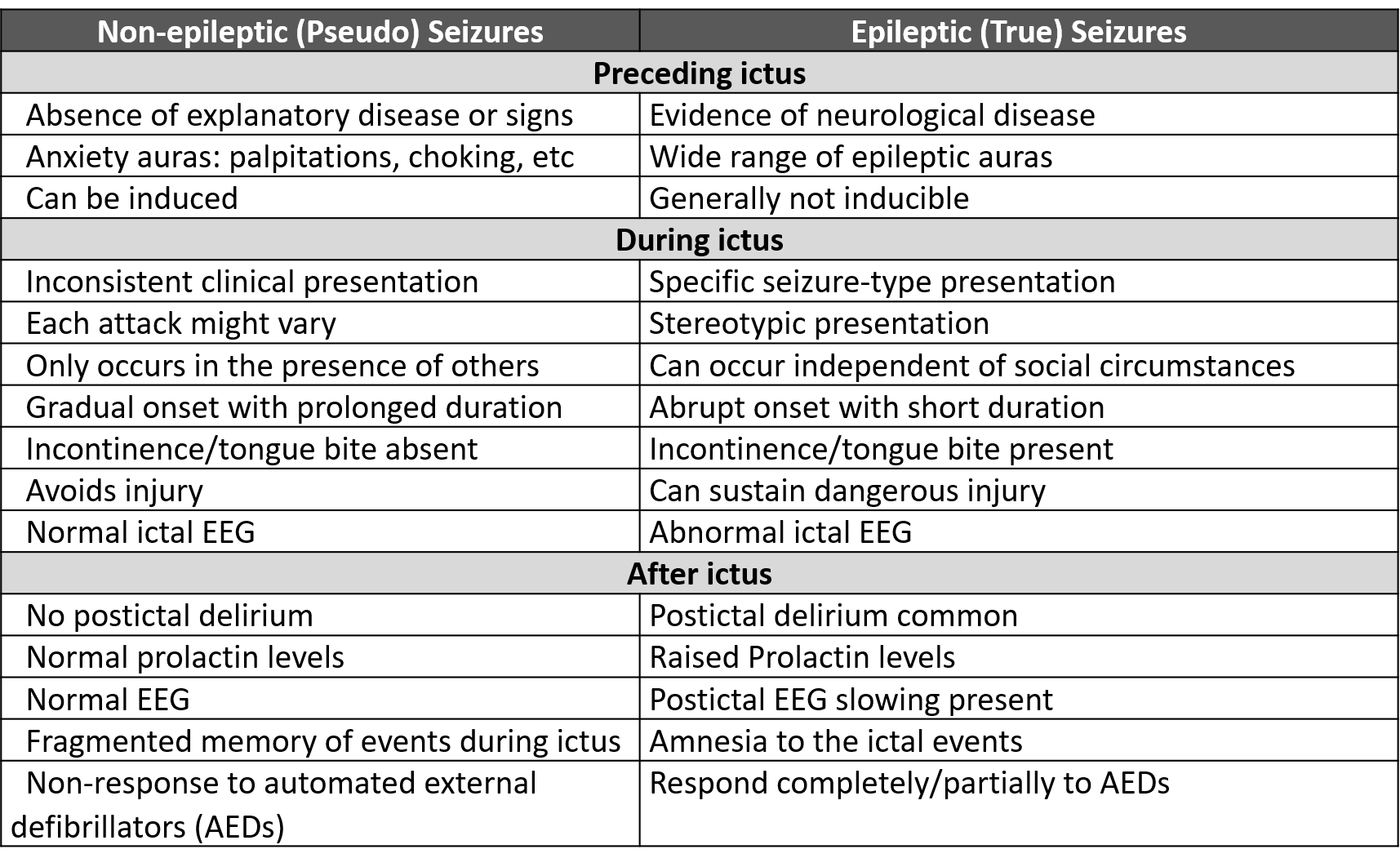
True vs. Pseudo seizures
Useful clinical tests
Hoover’s test:
A test useful to differentiate organic and functional weakness. The test is performed by placing a hand of the examiner below the heel of the suspected lower limb and the other limb is asked to be lifted. If the weakness is organic, then there is no pressure felt on the hand. In non-organic states there is a significant pressure felt on the hand under the suspected limb with weakness.
Midline splitting:
A clear demarcation of sensory loss along the midline of the face or body is more suggestive of non-organic sensory deficit.
Pronator drift:
An organic lesion will lead to excessive pronator action and drift when the individual extends the uppler limbs with the palm facing upwards and closes his eyes.
Abductor sign (Sonoo abductor sign):
An useful clinical test, which can distinguish between organic and non-organic leg paresis, using the principle of synergistic movements of bilateral hip abductors. The examiner asks the patient to abduct each leg and oppose this movement with his hands placed on the lateral aspects of the patient's legs. The leg contralateral to the abducted one shows opposite actions for organic and functional paresis. When the weak leg is abducted, the normal leg remains stable in patients with organic paresis, but moves in the hyperadducting direction in functional paresis.
Sternocleidomastoid test:
Sternocleidomastoid muscle has bilateral innervation. Hence, patients with organic hemiparesis donot show weakness of this muscle, where in functional hemiparesis individuals would show extensive sternocleidomastoid weakness.